NCAA Men's Hockey: A Legacy Forged on Ice
The quest for collegiate hockey supremacy culminates annually in one of the most thrilling spectacles in sports: the NCAA Men's Ice Hockey Championship. Since its inception in 1948, this single-elimination tournament has served as the ultimate proving ground for Division I men's college hockey programs across the United States. Over nearly eight decades, 78 champions have etched their names into history, with each puck drop, every save, and every overtime goal contributing to a rich tapestry of athletic excellence and unforgettable drama. From the humble beginnings of a four-team bracket to the modern 16-team format culminating in the electric Frozen Four, the Ncaa Hockey Championship represents the pinnacle of amateur hockey, where skill, grit, and teamwork converge in a fast-paced, physical battle for national glory.
The Genesis of Glory: A Tournament's Rich History
The idea of crowning a national collegiate champion for ice hockey took official form in 1948, as the NCAA sought to formalize what had previously been regional competitions. This groundbreaking move established the NCAA Men's Ice Hockey Championship as the organization's very first national tournament, reflecting the sport's burgeoning popularity in the post-World War II era. The inaugural event, held between March 18-20, 1948, at the iconic Broadmoor Ice Palace in Colorado Springs, Colorado, set the stage for a tradition that would captivate generations of fans.
Featuring a compact four-team, single-elimination format, the early tournaments showcased the burgeoning talent primarily concentrated in the northern U.S. states. The University of Michigan Wolverines, under the legendary coach Vic Heyliger, claimed that historic first title, defeating Boston College in the semifinals before triumphing over Dartmouth with an 8-4 victory in the final. This early period emphasized the purity of intercollegiate competition, focusing on skilled amateur play among student-athletes from institutions like Michigan, Boston College, Dartmouth, and Colorado College, which would dominate the early 1950s with a commanding 13-4 win over Boston University in 1950.
The tournament retained its intimate four-team structure for several decades, with selections based on seasonal performance and regional strength rather than formalized conference structures. This era laid the foundation for the sport, fostering intense rivalries and a dedication to the student-athlete ideal. However, as college hockey grew, so did the need for expansion. A pivotal moment arrived in 1980 when the Ncaa Hockey Championship expanded to its current 16-team format. This change not only broadened the field of contenders but also ushered in the regional playdown structure, eventually leading to the highly anticipated Frozen Four semifinals and final game. This evolution transformed the tournament from a regional curiosity into a truly national spectacle, allowing more teams and regions to vie for the ultimate prize and setting the stage for the modern era of college hockey prominence. For a deeper dive into how this championship has evolved, explore From 4 Teams to Frozen Four: NCAA Men's Hockey Evolution.
Record Holders and Dynasties: Denver's Reign and Michigan's Legacy
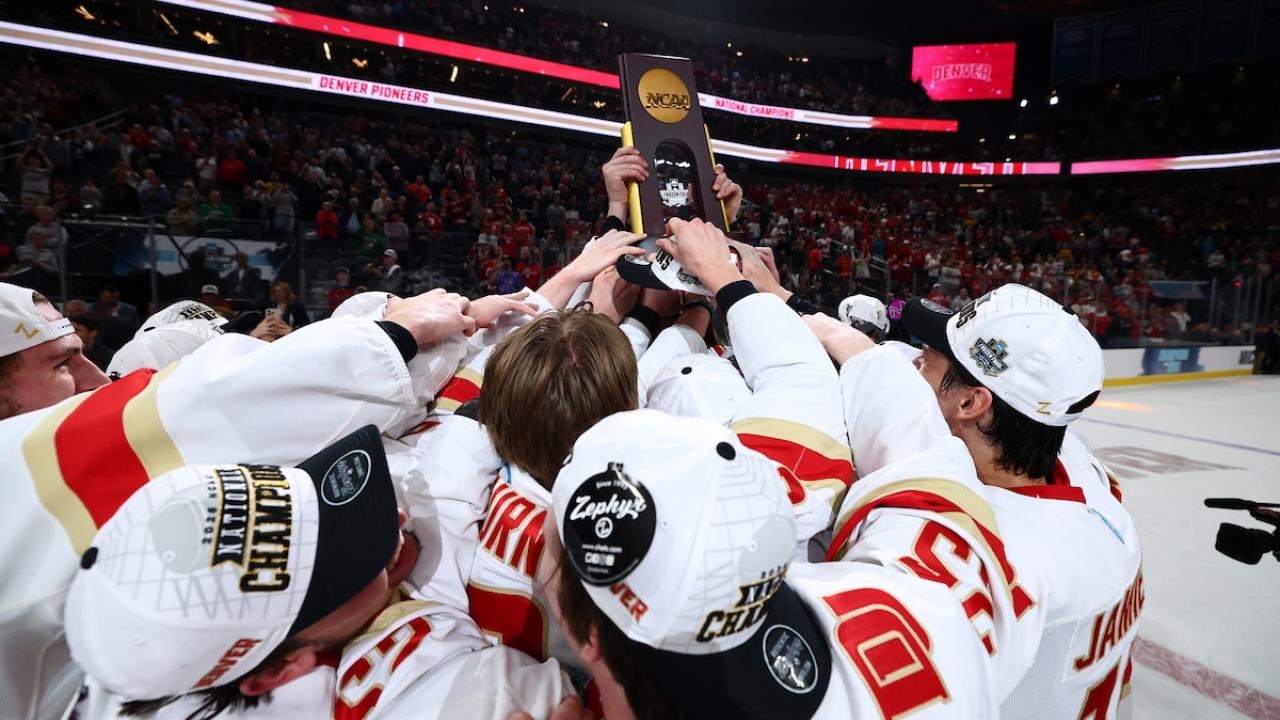
Throughout the storied history of the Ncaa Hockey Championship, certain programs have distinguished themselves through consistent excellence and an unparalleled ability to reach the pinnacle. The University of Denver Pioneers stand alone at the top, holding the incredible record of 10 national titles. Their success spans multiple eras, demonstrating a remarkable ability to adapt and dominate across generations. Four of their championships came in the competitive 1960s, a testament to early program strength, while more recent triumphs in 2017, 2018, 2022, and 2024 highlight their enduring prowess and a modern-day dynasty under coach David Carle. Denver's sustained success is often attributed to a strong coaching philosophy, robust player development, and a culture of winning that attracts top talent.
Close behind the Pioneers are the University of Michigan Wolverines, with 9 titles. Michigan's legacy is particularly intertwined with the tournament's beginnings, as they claimed the inaugural championship in 1948 and dominated early decades under the tutelage of Vic Heyliger. Their tradition of excellence continues, making them a perennial contender and a formidable force whenever they qualify for the championship. These two programs exemplify the blend of historical prestige and contemporary competitiveness that defines college hockey.
Beyond these two titans, other programs have carved out their own impressive legacies. Boston College, for example, secured the 1949 crown and has been a consistent power in Hockey East. The 2025 tournament delivered a thrilling new chapter, with Western Michigan University capturing its first-ever Ncaa Hockey Championship. Their 4-3 overtime victory over Boston University not only marked a historic moment for the Broncos but also underscored the increasing parity and competitiveness across Division I hockey. This memorable win is a testament to the belief that any team, with the right combination of talent, coaching, and momentum, can write their own Cinderella story in this unforgiving single-elimination format.
The Road to the Frozen Four: Selection, Rivalries, and Intense Play
The journey to hoist the national championship trophy is arduous, demanding peak performance and unwavering resilience. The modern Ncaa Hockey Championship field comprises 16 Division I teams, meticulously selected through a combination of automatic bids and at-large selections. Automatic bids are awarded to regular-season conference champions, ensuring that strong seasonal performances are rewarded. The remaining at-large berths are determined by sophisticated performance metrics, primarily the PairWise Rankings, which evaluate teams based on strength of schedule, head-to-head records, and common opponents. This rigorous selection process ensures that only the most deserving teams earn a shot at the title.
Once the 16-team bracket is set, the tournament unfolds through regional playdowns, typically held at neutral sites across the country. These regional matchups are intense, best-of-one affairs where a single mistake can end a season. The winners of the four regional tournaments advance to the storied Frozen Four—the semifinals and championship game—which traditionally takes place in early April. This setup guarantees maximum drama, as every game is a do-or-die scenario, rewarding teams that can perform under immense pressure.
The atmosphere surrounding these games, particularly within conferences like Hockey East and the National Collegiate Hockey Conference (NCHC), is electric. Regional rivalries ignite the ice, fueling passionate fan bases and creating an environment unlike any other in collegiate sports. The sport itself is a blend of speed, physicality, and finesse, requiring precision passing, exceptional goaltending, and unparalleled endurance. A best-of-one playoff structure magnifies every decision, every shot, and every penalty, making strategic depth and mental toughness as crucial as raw talent. To understand the intricacies of how these teams navigate the bracket, refer to Frozen Four Path: How 16 Teams Battle for NCAA Hockey Glory.
Why the NCAA Hockey Championship Captivates
What truly sets the Ncaa Hockey Championship apart is its unique blend of raw collegiate emotion and high-stakes professional-level play. Unlike many professional playoff formats, college hockey's single-elimination structure means there's no room for error, creating unparalleled intensity. Every shift, every save, and every goal carries immense weight, transforming games into thrilling, unpredictable sagas. Fans are drawn to the passion of student-athletes playing for their school, their teammates, and a national title – a dream they’ve often pursued since childhood.
The tournament is also a significant showcase for future NHL talent. Many of today���s biggest hockey stars honed their skills in the collegiate ranks, and the Frozen Four provides an unparalleled platform for scouts and fans to witness these emerging talents under pressure. Beyond the individual skill, the championship emphasizes team play, strategic coaching, and the ability to adapt on the fly. Whether it's a clutch power play, a game-saving penalty kill, or an overtime heroics, the narratives that emerge from this tournament are often legendary.
Practical Tip for Fans: To truly appreciate the championship, pay attention to team special teams percentages (power play and penalty kill efficiency), as these often decide tight games. Also, keep an eye on goaltender save percentages and composure, as elite netminding can steal a game and carry a team deep into the tournament. Understanding these dynamics will enhance your viewing experience and provide insight into which teams might have the edge.
Conclusion
The NCAA Men's Ice Hockey Championship stands as a testament to the enduring appeal and competitive spirit of college hockey. From its pioneering start in 1948 to the modern spectacle of the Frozen Four, it has consistently delivered drama, celebrated dynasties like Denver and Michigan, and crowned unexpected heroes like Western Michigan. The tournament's rich history, its rigorous path to qualification, and the electrifying single-elimination format combine to create an annual event that captivates fans and showcases the very best of collegiate athletic achievement. As new seasons dawn and new talents emerge, the quest for the next Ncaa Hockey Championship will undoubtedly continue to inspire, leaving an indelible mark on the annals of sports history.